

Join Our Community of 5,000+ Adventure Seekers – Subscribe Now!
Get Ready to Go on a Cultural Journey:
Join Our Newsletter and Discover Fascinating Destinations and Literary Adventures That Will Ignite Your Imagination!
Affiliate Disclosure: As an Amazon Associate, I earn from qualifying purchases. If you choose to purchase after clicking a link, I may receive a commission at no extra cost to you.
“1984” by George Orwell is a gripping novel that has captivated readers for decades – especially his concept of Big Brother in 1984.
Set in a totalitarian society, the story follows Winston Smith as he rebels against the oppressive regime led by Big Brother.
One of the central themes of the book revolves around the existence of Big Brother as a person.
In this article, we will explore the concept of Big Brother and answer the question, “Is Big Brother a real person in 1984?” Let’s dive in and unravel the mysteries of this iconic character.
Is Big Brother a Real Person in 1984?
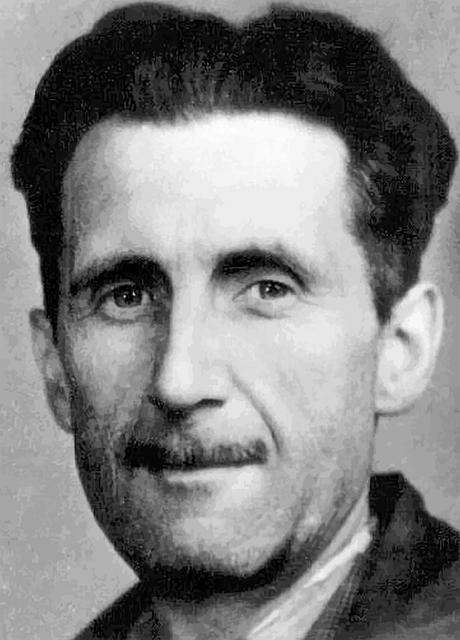
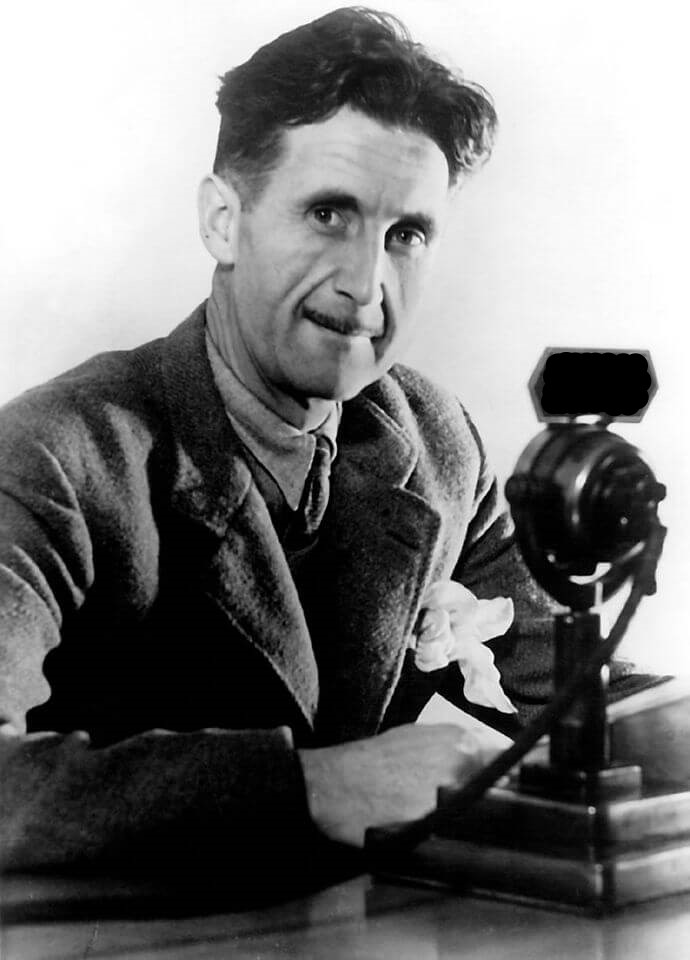
George Orwell’s “1984” introduces the omnipresent figure of Big Brother, who serves as the symbol of the authoritarian regime ruling over Oceania.
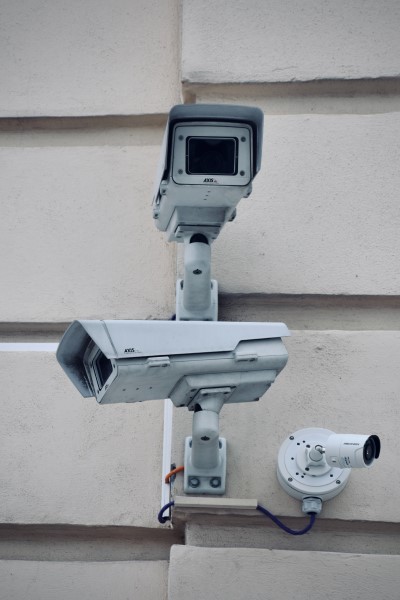
Big Brother is portrayed as a larger-than-life leader who watches over the citizens through surveillance systems, such as telescreens and the Thought Police.
However, it is crucial to understand that Big Brother is not an actual person in the novel. Instead, he represents the embodiment of the party’s ideology and power.
The Power of Big Brother
Within the context of the novel, Big Brother wields immense power and control.
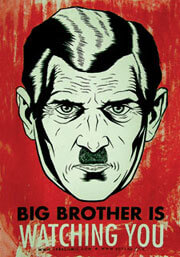
The citizens of Oceania are constantly reminded of his presence through slogans like “Big Brother is Watching You.”
The party’s surveillance apparatus instills fear and paranoia in the minds of the people, ensuring their compliance with the regime’s rules and doctrines.
This perpetual state of surveillance and control reflects Orwell’s critique of totalitarian regimes and the dangers of unchecked authority.
The Illusion of Big Brother’s Existence
Although Big Brother is not a real person, the party creates the illusion of his existence to manipulate and dominate the masses.
The party leaders use Big Brother as a tool to enforce conformity and suppress individuality.
By projecting an omnipotent figure, the regime effectively extinguishes any dissent and reinforces the belief in their infallibility.
The citizens are expected to love and revere Big Brother, symbolizing their loyalty to the party.
Exploring the Concept of Big Brother
The Origins of the Term
The term “Big Brother” gained prominence through George Orwell’s novel, but its roots can be traced back to earlier works.
Orwell drew inspiration from political ideologies and historical figures when crafting the character of Big Brother.
The concept of a controlling and all-seeing authority has existed in various forms throughout history, making Big Brother a representation of the dark side of power.
The Influence of Totalitarian Regimes
Orwell wrote “1984” in the aftermath of World War II, drawing from his observations of totalitarian regimes such as Nazi Germany and the Soviet Union.
The manipulation of truth, constant surveillance, and suppression of individuality depicted in the novel echo the characteristics of these oppressive regimes.
Big Brother serves as a cautionary figure, reminding us of the dangers of unchecked state control.
The Impact on Pop Culture
“1984” and the concept of Big Brother have left an indelible mark on popular culture.
The term “Big Brother” has become synonymous with invasive surveillance and encroachment on privacy. It has been referenced in literature, movies, and even reality television shows.
The influence of Orwell’s work continues to resonate, reminding us of the importance of safeguarding our freedoms and challenging authoritarian tendencies.
What is the meaning of ‘Big Brother Is Watching You’ in George Orwell’s Book 1984?
The phrase “Big Brother is Watching You” is a chilling reminder to the citizens of Oceania that they are under constant surveillance. It serves as a warning that their actions, thoughts, and even emotions are monitored by the party.
This surveillance creates an atmosphere of fear and paranoia, ensuring compliance with the regime’s rules.
The Real Meaning of “Big Brother is Watching You”
George Orwell’s 1984 Big Brother is a formidable figure. George Orwell wrote the sentence “Big Brother is watching you” in his novel 1984 (Nineteen Eighty Four).
It comes up on the first page and third paragraph of the book. However, what most people think of Big Brother today is different from the meaning George Orwell intended in his book.
“Big Brother Is Watching You” – this is the caption that runs underneath a giant poster in George Orwell’s novel. As Winston Smith, the protagonist of 1984, enters an apartment building he is faced with a giant poster with an enormous face. This face belongs to ‘Big Brother’.
“Even from the coin the eyes pursued you” (p.21)
The giant poster of ‘Big Brother’ was designed so that no matter where you go the eyes follow you about as you move. This is the literal meaning of ‘Big Brother Is Watching You’.
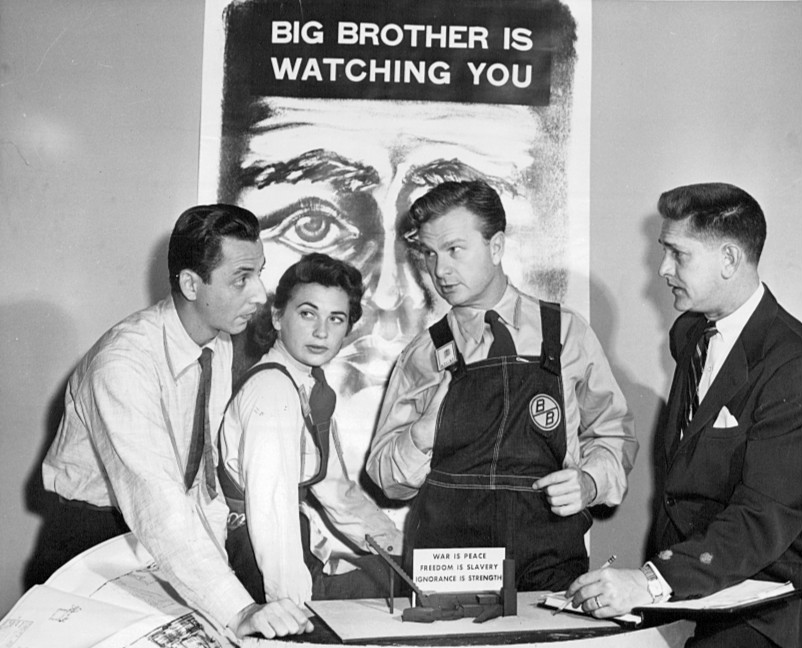
Throughout the book ‘Big Brother’ does not just appear on posters.
He also appears as a vast figure on TV screens (pg.12), on coins being used as money (pg. 21), on stamps, on the covers of books, on banners, on the wrappings of cigarette packets (pg. 21), on children’s history books (pg.62), as a giant papier-mâché model two metres wide (pg.83), and as portraits lining the streets (pg.117).
Who is George Orwell’s 1984 Big Brother?
Who is Big Brother in 1984?
Big Brother is the supposed leader and face of the ruling party in Oceania.
Although not an actual individual, Big Brother is portrayed as an omnipresent figure through propaganda posters, slogans, and the constant reminder that “Big Brother is Watching You.”
Was Big Brother a real person in 1984?
The answer to this question is no. In the novel “1984,” Big Brother is not a real person but rather a symbol representing the ruling party’s ideology and control. Big Brother embodies the oppressive regime’s power and serves as a tool to manipulate and monitor the citizens of Oceania.
The protagonist, Winston Smith, also asks the same question. However the answers he hears back does not curb his want to learn the truth. The answers he receives to his questions are:
“Nobody has ever seen Big Brother” (p.162)
“Does Big Brother exist?”
“Of course he exists. The Party exists. Big Brother is the embodiment of the Party.” (p.204)
This shows that there was no real identity for Big Brother as revealed in the novel 1984.
However, if we are to take some examples from history, there probably was at least one main leader who controlled the party.
George Orwell published his novel Nineteen Eighty Four in 1949, so we could see what kind of historical examples he may have looked at when writing his book.
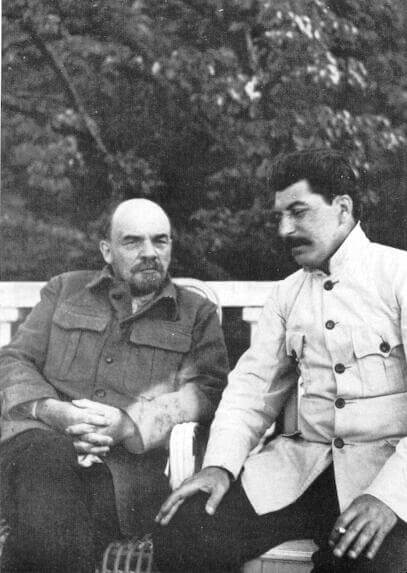
The main example would have been Joseph Stalin who ruled the Soviet Union from the 1920s to his death in 1953. Joseph Stalin initially ruled the USSR as a one-party state governed by plurality but by the 1930s became the dictator of the Soviet Union.
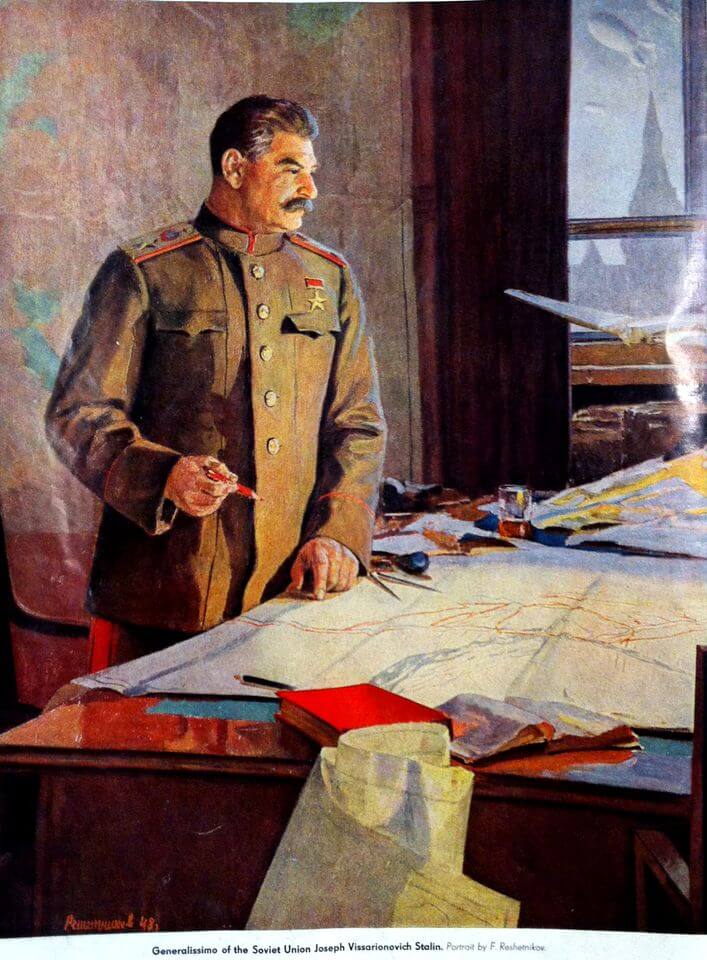
In a bid to shore up his control of the party and of the USSR, throughout these years Stalin grew a Cult of Personality.
This is where he was deliberately portrayed to the people of USSR as a great person who should be admired and loved.
How did he do this?
By bringing all artistic and cultural production under state control. In effect, all artists were employed by the state to create products that consistently praised Stalin with all competing points of view eliminated.
So, Is Big Brother a Real Person in 1984?
Big Brother in George Orwell’s 1984 might not be a real person.
Well, at least Big Brother’s identity is not given. But we can also see similar processes of personality cults with other leaders of totalitarian communist or totalitarian fascist states as well.
These include Joseph Stalin (the Soviet Union – see above), Chairman Mao Zedong (Republic of China), Adolf Hitler (Nazi Germany), Benito Mussolini (fascist Italy), as well as Kim Il Sung, Kim Jong Il, and Kim Jong Un (all three from North Korea).
“Asleep or awake, working or eating, indoors or out of doors, in the bath or in bed – no escape.” (p.21)
So here we can see very similar ideas and mechanisms between Cult of Personalities historically around the world and George Orwell’s 1984 Big Brother.
Even if we are not given any answers to the identity of Big Brother in the novel, it seems according to historical precedent that there must have been one leader who controlled the one-party state.

What does Big Brother mean?
In the context of the novel, Big Brother represents the all-powerful party that governs Oceania.
He symbolizes the regime’s ability to exert control over every aspect of the citizens’ lives.
Big Brother serves as a mechanism of fear and oppression, ensuring conformity and obedience.
What does Big Brother represent in George Orwell’s 1984?
Big Brother represents the ‘dictatorship of the party’. Essentially this means that the party is represented by Big Brother, both being entities that are always watching and knowing every action and thought of the population.
This is shown by the omnipresent images of Big Brother throughout the novel. The vast face appears everywhere from giant banners within and outside apartment blocks to stamps, coins and the covers of children’s history books.
“Big Brother is the guise in which the Party choose to exhibit itself to the world” (p.162).
Winston Smith, the protagonist of the novel, continuously describes the eyes of Big Brother in portraits and banners designed so that they seemingly follow you as you move. In effect, it is not just Big Brother who is watching you but the Party itself.
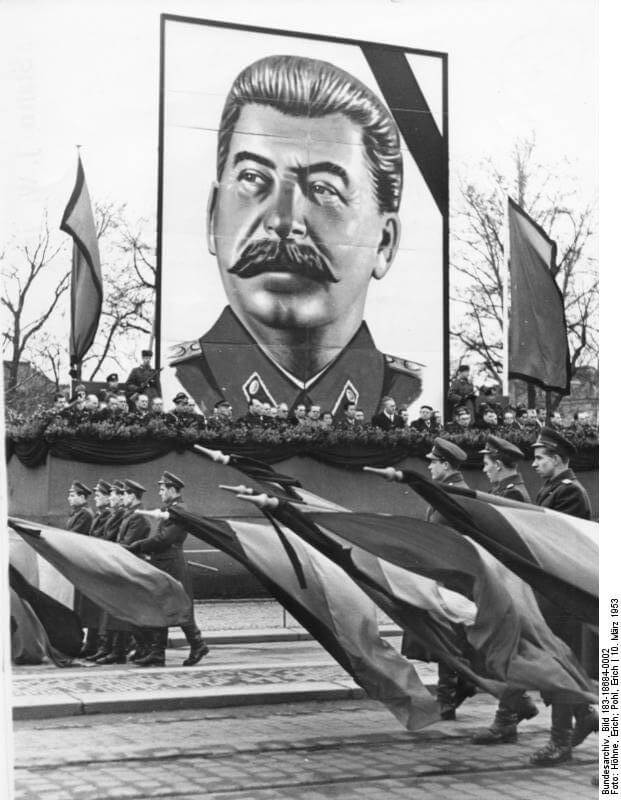
This kind of ever-present surveillance by the party is further emphasized by the telescreens which receive and transmit simultaneously.
These telescreens in the novel seem as ubiquitous as televisions or mobiles are in our own world, but with one difference: they can be dimmed but can’t be turned off.
Who wrote the line “Big Brother is Watching You”?
The line “Big Brother is Watching You” was written by George Orwell, the author of the novel “1984.”
Orwell’s works often touched on themes of political oppression, manipulation, and the dangers of authoritarian rule.
The author who wrote the line “Big Brother is Watching You” is George Orwell. In addition to his renowned novel “1984,” Orwell has written several other notable books. Here are some of his other well-known works:
“Animal Farm” (1945):
A satirical allegory that depicts a group of farm animals overthrowing their human farmer to establish an egalitarian society. The novel serves as a critique of the Soviet Union and explores themes of power, corruption, and revolution.
“Down and Out in Paris and London” (1933):
Orwell’s semi-autobiographical work recounts his experiences living in poverty in both cities. The book provides a firsthand account of the hardships faced by the working class and highlights issues of social inequality.
“Homage to Catalonia” (1938):
This non-fiction book is based on Orwell’s experiences fighting in the Spanish Civil War. It offers a personal and political exploration of the conflict, reflecting on the rise of fascism and the complexities of war.
“Burmese Days” (1934):
Set in colonial Burma (present-day Myanmar), this novel delves into the lives of British colonizers and explores themes of racism, imperialism, and personal disillusionment.
“Coming Up for Air” (1939):
A novel that follows the protagonist, George Bowling, as he reflects on his life and contemplates the changes brought about by modernity. The book explores themes of nostalgia, societal progress, and the loss of individuality.
Is 1984 about Stalin?
While the novel “1984” draws inspiration from totalitarian regimes like Nazi Germany and the Soviet Union, it is not solely about Joseph Stalin.
Orwell’s intention was to create a fictional world that reflected the worst aspects of authoritarianism and totalitarianism.
While Stalin’s regime serves as one influence, the novel critiques the broader dangers of unchecked power.
Does the book 1984 condemn communism or just Stalin?
“1984” can be seen as a critique of totalitarianism and the abuse of power, rather than a condemnation of communism as an ideology.
Orwell’s aim was to highlight the dangers of oppressive regimes and the erosion of individual freedom.
While the novel reflects the negative aspects of authoritarian rule, it does not specifically target communism alone.
What does Big Brother mean today?
Nowadays, Big Brother is not just a term that has a negative connotation but is also the title of a worldwide popular TV series.
The TV series Big Brother first started in 1999 and was originally a Dutch reality competition TV series that was created by John de Mol.
Now Big Brother is a franchise which has different TV series across the world including US, Australia, Canada, China, Africa, the Balkans, Albania, Angola, Belgium, Brazil and lots more.
In each of the different franchises, there is a common premise.
That is, housemates (people living in the house) live together in a specifically constructed house that is isolated from the outside world. Housemates are voted out and the last housemate remaining wins a cash prize.
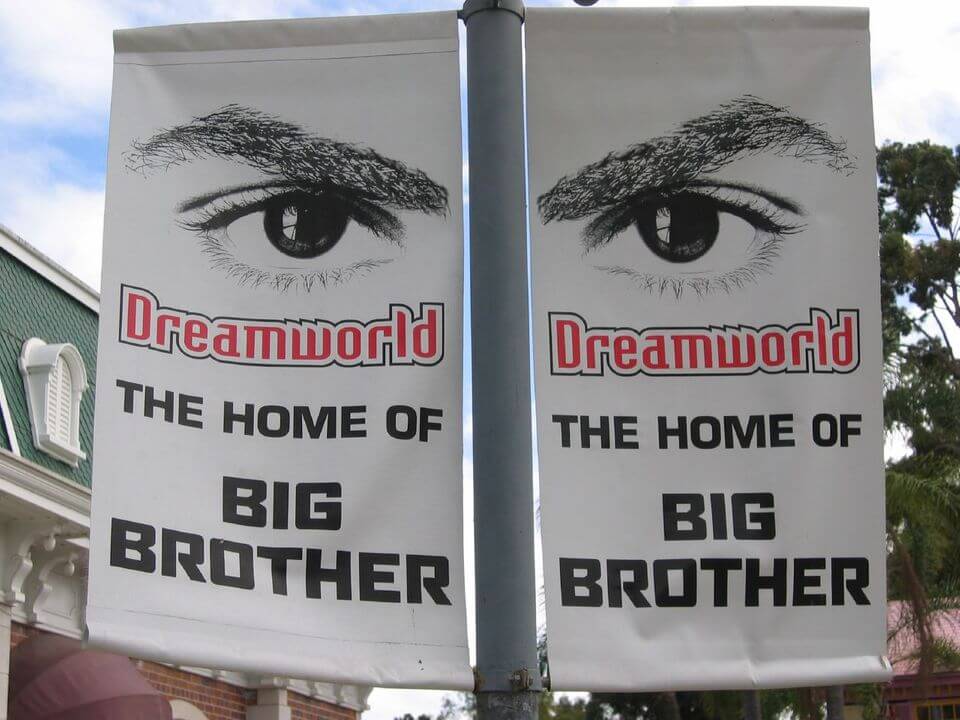
While living in the house, contestants are constantly monitored with a vast array of live television cameras and personal audio devices.
Big Brother is used as not only the title of the series but also an omnipresent authority figure who represents the producers of the TV series. The produces give the contestants tasks to do by communicating with them through the Big Brother authority figure.
What Classic Novel Did TV’s “Big Brother” Get It’s Name From?
The TV show “Big Brother” got its name from the classic novel “1984” written by George Orwell. The show’s creators drew inspiration from the concept of Big Brother in Orwell’s novel, particularly the idea of constant surveillance and the invasion of privacy.
In “1984,” Big Brother represents an authoritarian regime that closely monitors and controls its citizens.
The TV show “Big Brother” similarly features contestants living together in a house while being continuously observed by cameras.
The name “Big Brother” serves as a nod to Orwell’s dystopian masterpiece and the themes of surveillance and manipulation it explores.
Is the idea of the TV show Big Brother taken from George Orwell’s 1984 Big Brother?
Although the name of the TV series is Big Brother, there is little else in common with George Orwell’s 1984 Big Brother.
George Orwell in his novel was attempting to depict a dystopian future in the UK where a totalitarian one party state controls and monitors the thoughts and behaviors of its populace.
In the TV series Big Brother, contestants in the house are continuously monitored with TV cameras and audio equipment.
The commonalities are that a group of people are being continuously monitored by cameras and audio.
However, in George Orwell’s 1984 the populace has no control over the monitoring. In contrast, in the TV series Big Brother contestants apply for and can withdraw themselves from the house at any time they like.
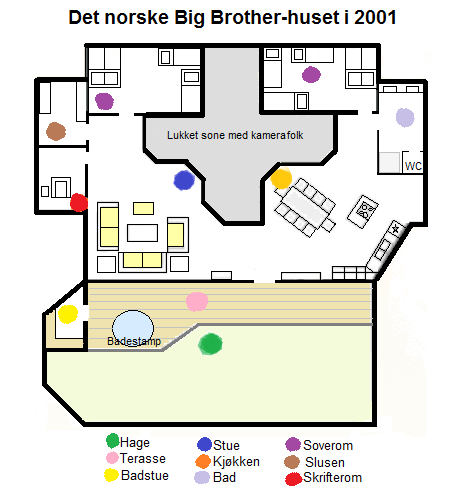
Also, other reality TV series such as Survivor! have cameras pointed at the contestants for most of the time.
If there were some other TV series which attempted to bring other concepts of George Orwell’s series into reality there would most likely some kind of legal ramification.
In particular, one major part of George Orwell’s novel 1984 was about censorship.
This is where photographs are edited and public archives modified in order to control the information given to the populace.
People who have been eliminated from the party are removed from photographs, and past figures are changed in order to cover up falsehoods in the present.
This kind of censorship comes to the front in maintaining the admiration and love for Big Brother and the Party. However, these kind of themes are absent from the TV series Big Brother.
What is the book 1984 by George Orwell about?
George Orwell’s 1984 is essentially a criticism of totalitarian regimes.
He does this by portraying what the future would look like if England itself had become a totalitarian regime controlled by an all-seeing one-party state.
Looking at the historical context, the novel would be a major criticism towards Joseph Stalin’s dictatorship rule over the Soviet Union throughout the 1930s.
In particular, George Orwell’s other famous book Animal Farm is based on the criticism of Stalinism.
Animal Farm itself deals with the events leading up to the Russian Revolution of 1917 and the Stalinist era of the Soviet Union.
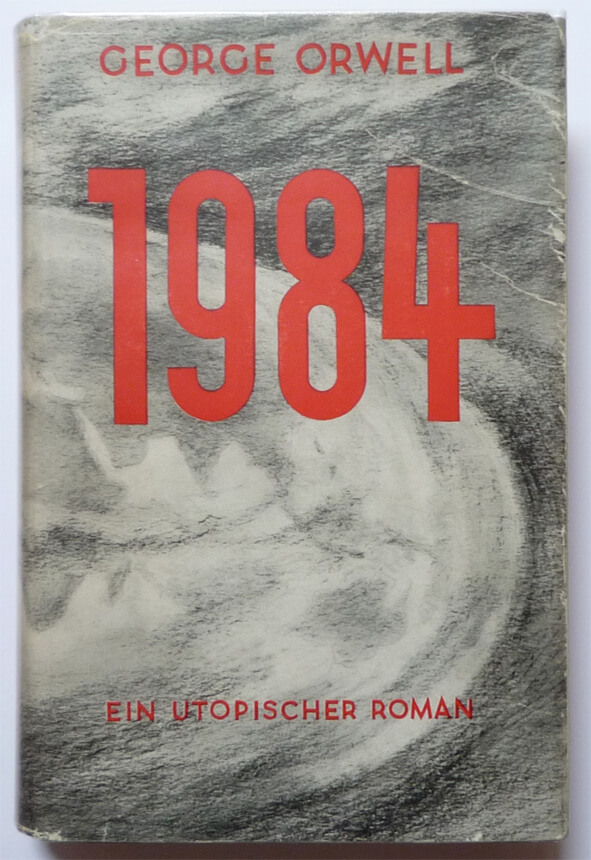
George Orwell’s Animal Farm was published in 1945, and Orwell’s 1984 was published in 1949.
Thus we can see that George Orwell’s Nineteen Eighty Four is a continuation of Orwell’s criticism of totalitarian regimes.
In particular, the fearful future where a totalitarian government has complete control over the past, present and future of their populace.
“Does he exist in the same way as I exist?”
“You do not exist,” said Brian. (p.204)
Nowhere is this more evident then in the censorship and monitoring powers of Big Brother and the Party.
When one can police the thoughts of citizens and modify the archival records to fabricate new facts, there is little ordinary citizens can do to gain back their rights of privacy and freedom of thought.
Or at least that is what Orwell wants to propose in his novel.
Summary of George Orwell’s Nineteen Eighty Four:
We follow the footsteps and thoughts of the main protagonist, Winston Smith, as he deals with a Britain controlled by a Stalinist totalitarian regime.
Big Brother and his cult of personality totally overwhelm the environment and setting of the novel, while Smith is merely a rank-and-file party member.
Smith secretly hates the Party and Big Brother but must hide his thoughts and intentions from other party members as well as the Thought Police.
He attempts to get help from the Brotherhood – a secret underground resistance force.
However, things begin to get complicated when Julia (a worker at the ministry) hands Smith a note that simply reads ‘I love you’.
Along the way Smith attempts to get help from his boss O’Brien (an inner Party member).
However, this does not go along the lines that Smith wanted.
In the end there is a bittersweet ending when Smith realizes that he loved Big Brother after all.
Essentially, this is not a fairy tale ending but in fact an emphasis of the total power of Big Brother and the Party.
Frequently Asked Questions (FAQ) about Big Brother in 1984
Q: How does Big Brother monitor the citizens in 1984?
Big Brother monitors the citizens through various surveillance systems, including telescreens that transmit both audio and visual data. The Thought Police also play a crucial role in identifying and punishing any signs of dissent or rebellion.
Q: Can anyone escape the watchful eye of Big Brother?
Escaping the watchful eye of Big Brother is nearly impossible. The party’s surveillance infrastructure is pervasive, making it extremely challenging for individuals to evade scrutiny or engage in activities deemed subversive by the regime.
Q: Is Big Brother a real person in the novel?
No, Big Brother is not a real person in the novel “1984.” He is a symbol representing the party’s control, manipulation, and the dangers of authoritarian rule.
Q: Why is Big Brother portrayed as an omnipresent figure?
Big Brother is portrayed as an omnipresent figure to instill fear and maintain control over the citizens. By creating the illusion of constant surveillance, the party can effectively suppress dissent and enforce conformity.
Q: What is the significance of the slogan “Big Brother is Watching You”?
The slogan “Big Brother is Watching You” serves as a constant reminder to the citizens that they are under surveillance. It reinforces the party’s power and control, ensuring obedience and conformity.
Q: How does Orwell’s portrayal of Big Brother relate to real-world concerns?
Orwell’s portrayal of Big Brother raises important questions about the balance between state power and individual freedom. It serves as a cautionary tale, warning us about the potential dangers of unchecked authority and the erosion of privacy.
Final Thoughts On Whether Big Brother is Real in 1984
In George Orwell’s “1984,” the enigmatic figure of Big Brother looms large over the narrative, symbolizing the oppressive regime’s control and surveillance.
While Big Brother is not a real person in the novel, his presence is felt throughout, casting a shadow of fear and conformity.
Orwell’s exploration of power, manipulation, and the suppression of individuality continues to resonate in today’s world.
As we reflect on the concept of Big Brother, we must remain vigilant in safeguarding our freedoms and challenging any encroachment on privacy.
What did you think of George Orwell’s 1984 Big Brother?
Do you like the ending of the book?
Are you only reading this because you have to do a book report that’s due tomorrow?
Let me know what other burning questions about George Orwell’s 1984 Big Brother you want answered below.
And always remember:
Big Brother Is Watching You.
If you have any other questions, let me below in the comment section.
Peace!
A.J. McMahon
.
.
.
(P.S. Got any other books you want me to read or review? Then…)
Let’s Connect!
– Instagram: Flyintobooks
– Pinterest: FlyIntoBooks
– Facebook: FlyIntoBooks
– Twitter: @FlyIntoBooks
– GoodReads: A.J. McMahon
Affiliate Disclosure: As an Amazon Associate, I earn from qualifying purchases. If you choose to purchase after clicking a link, I may receive a commission at no extra cost to you.
Join Our Community of 5,000+ Adventure Seekers – Subscribe Now!
Get Ready to Go on a Cultural Journey:
Join Our Newsletter and Discover Fascinating Destinations and Literary Adventures That Will Ignite Your Imagination!








Is the dystopian boom over now that Trump is out of office? Or are we still in a dystopian boom due to the thoughts of Big Data and the control of Meta/Alphabet/etc.?
Great article about Orwell! I’ve been in a very Orwellian mood lately and I appreciate your analysis. The section on pop culture connections was particularly fun. I had forgotten all about thrbTV show!
Thanks a lot Beckie! 🙂
Yeah, there’s lots of TV show popping up based on dystopian novels!
It’s the kind of people are in now I guess haha 🙂